
How to Remember Resistor Color Codes Easily: Complete Beginner Guide
How to Remember Resistor Color Codes Easily: Complete Beginner Guide
Search Description: Learn resistor color codes easily with simple memory tricks, color chart, multiplier, tolerance, and practical examples for beginners.
Resistors are among the most common components used in electrical and electronics circuits. If you are a beginner, one of the first things you should learn is how to read resistor color codes. These small colored bands tell the resistance value, multiplier, and tolerance of a resistor without writing numbers on its body.
In this post, we will understand resistor color codes in a simple way, from beginner level to slightly advanced practical reading. By the end, you will be able to read a 4-band and 5-band resistor confidently.
Table of Contents
- What is a resistor?
- Why do resistors use color codes?
- Resistor color code chart
- Easy tricks to remember resistor colors
- How to read 4-band resistor color code
- How to read multiplier and tolerance bands
- Examples for practice
- Advanced notes for students
- FAQs
What is a Resistor?
A resistor is an electronic component that limits or controls the flow of current in a circuit. It is used in almost every electronic device, such as LED circuits, mobile chargers, power supplies, amplifiers, sensors, and microcontroller projects.
Resistors are measured in ohms (Ω). For example, a resistor may have a value of 100 Ω, 1 kΩ, 10 kΩ, or 1 MΩ.
Why Do Resistors Have Color Codes?
Small resistors do not have enough space to print large numerical values. So, manufacturers use colored bands to show the resistance value. Each color represents a number from 0 to 9. These bands help us identify the resistor value quickly.




Resistor Color Code Chart
The basic resistor color sequence is:
| Color | Digit | Multiplier | Tolerance |
|---|---|---|---|
| Black | 0 | ×1 | - |
| Brown | 1 | ×10 | ±1% |
| Red | 2 | ×100 | ±2% |
| Orange | 3 | ×1,000 | - |
| Yellow | 4 | ×10,000 | - |
| Green | 5 | ×100,000 | ±0.5% |
| Blue | 6 | ×1,000,000 | ±0.25% |
| Violet | 7 | ×10,000,000 | ±0.1% |
| Grey | 8 | ×100,000,000 | ±0.05% |
| White | 9 | ×1,000,000,000 | - |
| Gold | - | ×0.1 | ±5% |
| Silver | - | ×0.01 | ±10% |
How to Read a 4-Band Resistor
A standard 4-band resistor is read like this:
- The first band gives the first digit.
- The second band gives the second digit.
- The third band gives the multiplier.
- The fourth band gives the tolerance.
Green = 5, Brown = 1, Red = ×100, Gold = ±5%.
So the value is 51 × 100 = 5100 Ω = 5.1 kΩ ±5%.
Understanding the Multiplier Band
The multiplier band tells how many zeros should be added after the first two digits. For example, if the multiplier band is red, it means ×100. If it is orange, it means ×1000.
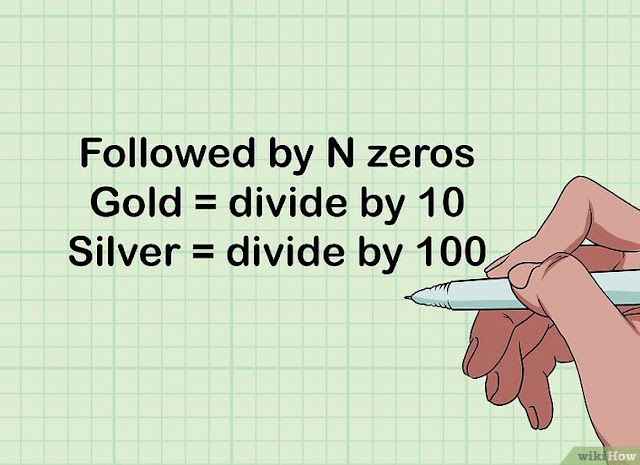
Gold and silver are special multiplier colors. Gold means divide by 10, and silver means divide by 100. These are used for low-value resistors.
Understanding the Tolerance Band
Tolerance tells how much the actual resistance value may vary from the written value. For example, if a 100 Ω resistor has ±5% tolerance, its actual value may be between 95 Ω and 105 Ω.
- Brown = ±1%
- Red = ±2%
- Gold = ±5%
- Silver = ±10%
- No tolerance band = ±20%
How to Read a 5-Band Resistor
In a 5-band resistor, the first three bands are significant digits, the fourth band is the multiplier, and the fifth band is the tolerance. These resistors are used where better accuracy is needed.
Brown = 1, Black = 0, Black = 0, Red = ×100, Brown = ±1%.
So the value is 100 × 100 = 10,000 Ω = 10 kΩ ±1%.
Beginner Tips to Avoid Mistakes
- Always keep the tolerance band on the right side before reading.
- Gold or silver bands are usually tolerance bands and are often placed at the end.
- Use a multimeter to verify the value if you are building an important circuit.
- Do not confuse violet and grey under poor lighting.
- Practice with common values like 220 Ω, 1 kΩ, 4.7 kΩ, and 10 kΩ.
Advanced Notes for Electronics Students
In practical electronics, resistor tolerance and power rating are also important. A resistor may have the correct resistance value but may still fail if its power rating is too low. Common power ratings are 1/4 W, 1/2 W, 1 W, and higher.
For precision circuits, such as sensor measurement, audio circuits, and voltage dividers, low-tolerance resistors like ±1% or ±0.1% are preferred. For simple LED circuits and general hobby projects, ±5% resistors are usually enough.
Real-Life Applications of Resistors
- LED current limiting
- Voltage divider circuits
- Pull-up and pull-down resistors in microcontrollers
- Biasing of transistors
- Signal conditioning circuits
- Power supply circuits
Quick Practice Questions
- Brown - Black - Red - Gold = ?
- Red - Violet - Orange - Gold = ?
- Yellow - Violet - Brown - Gold = ?
Answers: 1 kΩ ±5%, 27 kΩ ±5%, 470 Ω ±5%.
Frequently Asked Questions
What is resistor color code?
Resistor color code is a system of colored bands printed on a resistor to show its resistance value, multiplier, and tolerance.
How do I remember resistor color codes?
You can remember the sequence using the mnemonic: B.B. Roy of Great Britain Veto Getting Wed.
What does gold mean on a resistor?
Gold can mean ×0.1 when used as a multiplier, or ±5% when used as a tolerance band.
What does silver mean on a resistor?
Silver means ×0.01 as a multiplier or ±10% as a tolerance band.
How can I check resistor value accurately?
You can read the color bands manually and then verify the value using a digital multimeter.
Conclusion
Resistor color codes may look confusing at first, but with practice they become very easy. Start by memorizing the color sequence, then learn how the multiplier and tolerance bands work. Once you understand the pattern, you can read resistor values quickly without using any chart.
If you are learning electronics, this is one of the most useful basics to master because resistors are used in almost every circuit.


 Posts
Posts


No comments